How to Propagate Geraniums from Cuttings (Step by Step)
Learn how to propagate geraniums from cuttings in 8 easy steps: when to cut, what you need, how to root them and fix common problems.
In this guide
- What you'll need
- When to take geranium cuttings
- How to propagate geraniums from cuttings
- Step 1: Prepare the pots
- Step 2: Take the cutting
- Step 3: Strip the lower leaves
- Step 4: Dip in rooting hormone
- Step 5: Plant the cutting
- Step 6: Water and give it light
- Step 7: Keep it moist, not wet
- Step 8: Check for roots and pot up
- Troubleshooting
- Frequently asked questions
- Can you root geranium cuttings in water?
- How long do geranium cuttings take to root?
- Do I need rooting hormone?
- Can I take cuttings from a geranium with flowers?
- Are geraniums safe around pets?
- Sources
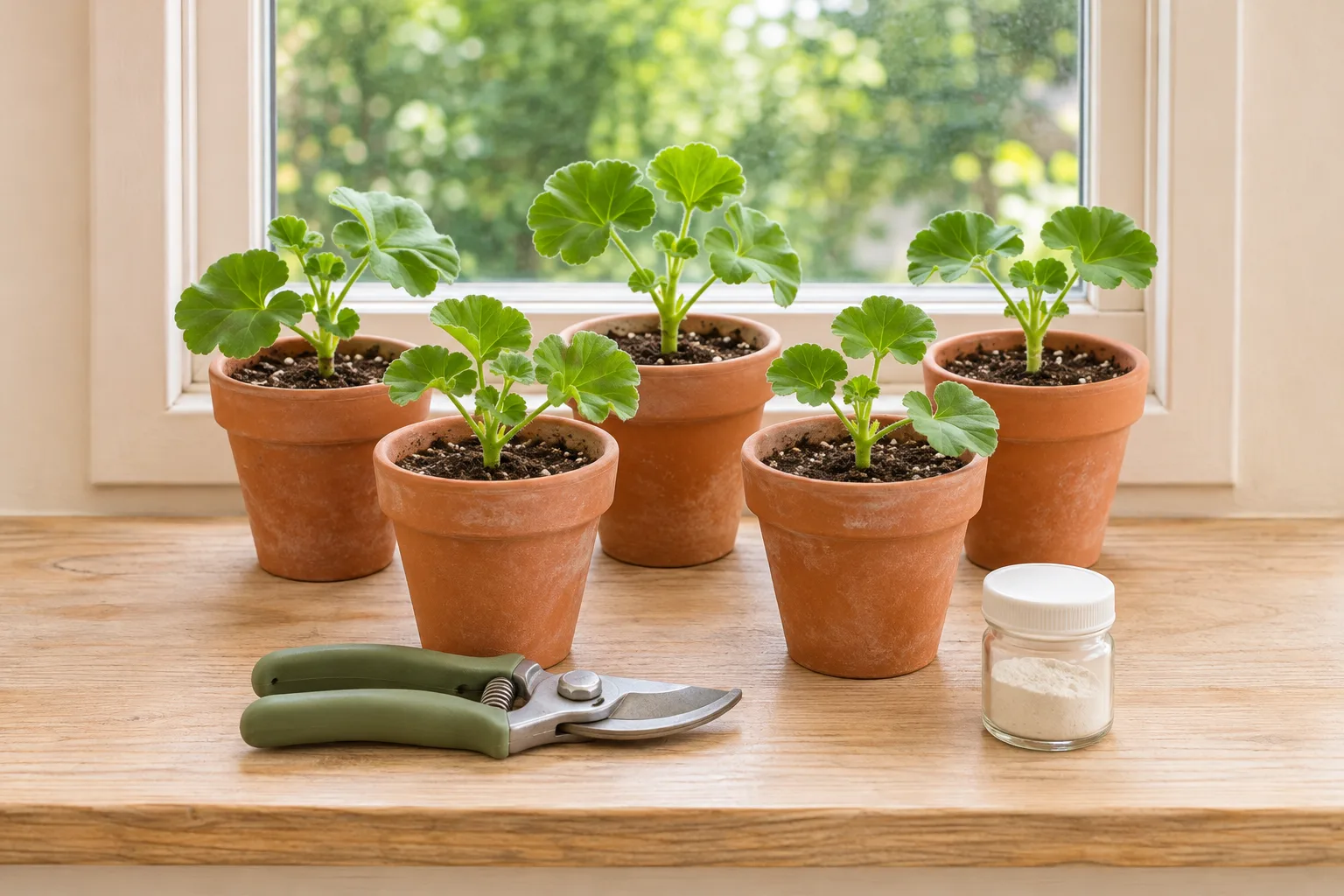
You can propagate geraniums from cuttings by snipping a 3- to 4-inch stem tip, stripping the lower leaves, dipping the cut end in rooting hormone and sticking it into damp, well-draining mix in bright (not direct) light. Most cuttings root in about 4 to 8 weeks, and a few cuttings from one plant can fill a whole windowsill for next to nothing.
At a glance
- Time
- about 15 minutes to take the cuttings, then 4 to 8 weeks to root
- Difficulty
- Easy
- Approx. cost
- about $0 to $15, depending on what you already own (prices vary)
- Best for
- common garden and houseplant geraniums (Pelargonium)
What you'll need
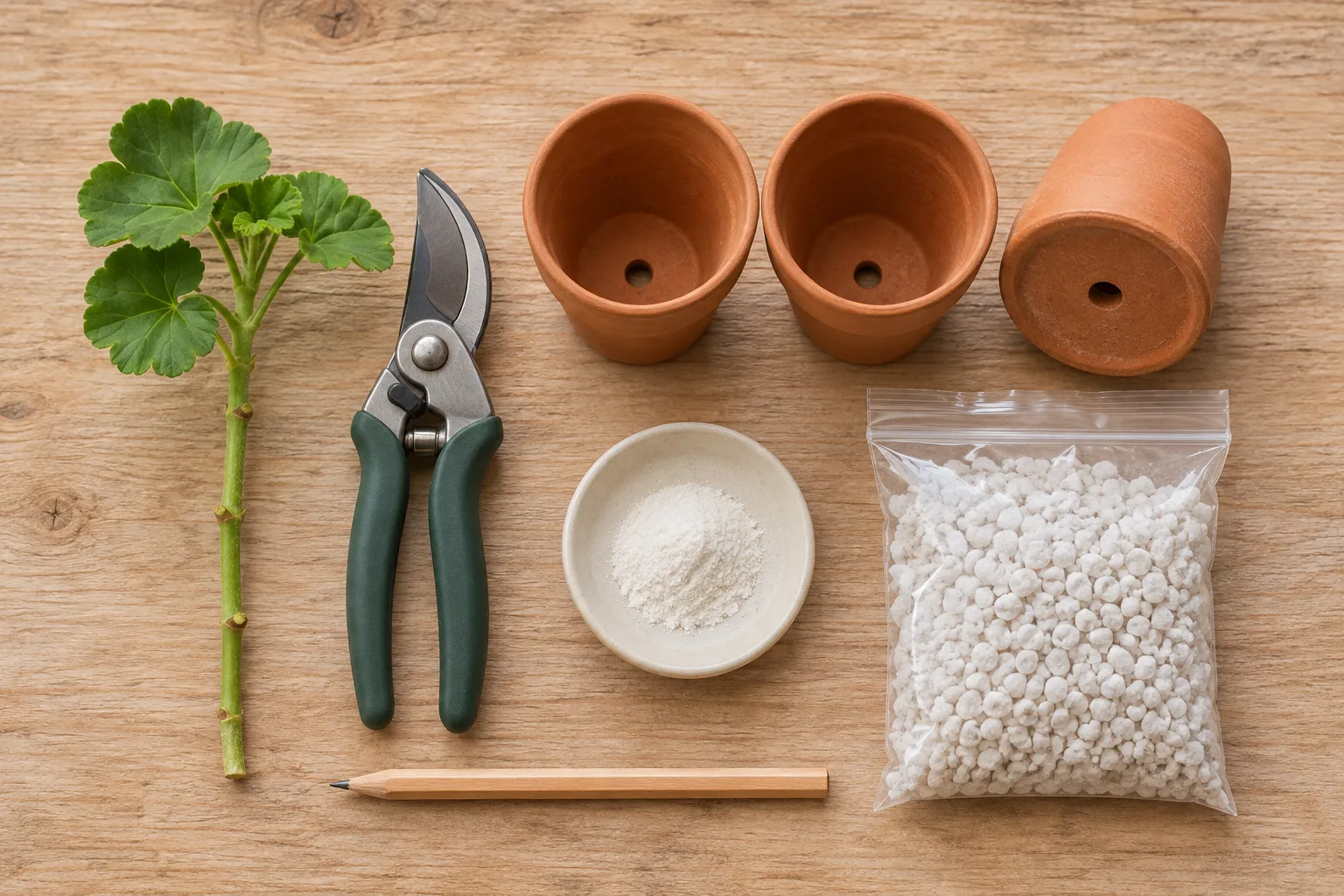
- A healthy, disease-free geranium to take cuttings from
- Sharp, clean scissors, pruners or a small knife
- Rooting hormone powder or gel
- Small pots (3 to 4 inches) with drainage holes, or a cell tray
- Rooting mix: perlite, vermiculite, or a mix of perlite and peat moss (a bagged seed-starting mix also works)
- A pencil or chopstick to make planting holes
- A clear plastic bag or dome (optional)
- A bright windowsill or a grow light
When to take geranium cuttings
Iowa State Extension suggests taking cuttings before the first fall frost if you want to keep a favorite plant going over winter. You can also take them from a healthy indoor plant whenever you can give the cuttings a bright window or grow light, since steady light matters more than the calendar.
Choose stems that are firm and green, with no flowers, spots or pests. If your plant has flower buds on the stem, pinch them off so the cutting puts its energy into roots.
Looking for more winter windowsill growing? See our guides to poinsettia plant care and growing tomatoes indoors.
How to propagate geraniums from cuttings
Step 1: Prepare the pots
Fill your pots with damp rooting mix and let the extra water drain. The mix should feel like a wrung-out sponge, not soggy. Make a planting hole in the middle with a pencil.
Step 2: Take the cutting
Cut a 3- to 4-inch piece from the tip of a healthy stem, just below a leaf node (the bump where a leaf joins the stem). Roots form at the nodes, so make sure at least one node will sit under the mix.
Step 3: Strip the lower leaves
Pinch off the lower leaves and any flowers or buds, leaving two or three leaves at the top.
Step 4: Dip in rooting hormone
Tip a little rooting hormone into a separate dish (so you don't contaminate the jar) and dip the cut end, then tap off the extra. Rooting hormone isn't strictly necessary for geraniums, but extension guides recommend it and it can speed things up.
Step 5: Plant the cutting
Push the cutting into the hole, at least one node below the surface, and firm the mix gently around it. You can plant several cuttings around the edge of a larger pot or put one in each small pot.
Step 6: Water and give it light
Water the mix well and let it drain. Set the pots somewhere bright but out of direct sun, which can scorch the cutting, or under a grow light.
Step 7: Keep it moist, not wet
Keep the mix evenly moist so the cutting doesn't dry out. A clear plastic bag or dome over the pot helps hold humidity, but check it often and take it off if you see mold or condensation pooling, because geranium stems rot easily in stagnant air.
Step 8: Check for roots and pot up
After about 4 to 8 weeks, new leaf growth and resistance when you give the cutting a gentle tug mean roots are forming. Once there is a good root system, move each cutting into its own 3- to 4-inch pot with regular potting mix, keep it in a bright spot, and water when the top of the soil feels dry.
Troubleshooting
| Problem | Likely cause | What to do |
|---|---|---|
| Stem turns black or mushy at the base | Too much water or poor airflow | Throw it out, take a fresh cutting, use a lighter mix and ventilate any cover |
| Leaves wilt and crisp | Mix dried out or too much sun | Water and move to bright, indirect light |
| Cutting looks fine but nothing happens | Still early, or too cool or dark | Wait a few more weeks and move to a brighter, warmer spot |
| Mold on the mix | Humid cover left on, stagnant air | Remove the cover, scrape off the mold and let the surface dry slightly |
Frequently asked questions
Can you root geranium cuttings in water?
It's possible, but soil or a well-draining mix is more reliable. Geranium stems are fleshy, and cuttings left sitting in water can rot before roots form.
How long do geranium cuttings take to root?
Extension guides give a range of about 4 to 8 weeks, depending on light, warmth and the cultivar.
Do I need rooting hormone?
Not strictly, but extension services recommend dipping the cut end, and it is cheap and easy to use.
Can I take cuttings from a geranium with flowers?
Yes, but remove the flowers and buds from the cutting so it can focus on making roots.
Are geraniums safe around pets?
No. The ASPCA lists geraniums as toxic to dogs and cats, so keep plants and trimmings out of reach.
Sources
- Overwintering Tender Geraniums, University of Wisconsin-Madison Extension
- How to overwinter geraniums for next year's garden, University of Illinois Extension
- How can I over-winter my geraniums indoors?, Iowa State University Extension
- Home Propagation of Houseplants, University of Missouri Extension
- Annual Geranium (Pelargonium), Clemson Cooperative Extension
- Geranium, ASPCA Toxic and Non-toxic Plants
More garden ideas
- Garden
DIY Garden Chair Bird Bath: Upcycle an Old Chair
DIY garden chair bird bath turns an old chair into a shallow, bird-safe water station. Easy afternoon project, about $5–$25 plus paint drying time.
- Garden
How to Propagate String of Turtles (Easy Cuttings)
Learn how to propagate string of turtles from stem cuttings: what to cut, how to root them, how long it takes and how to fix rot. Easy and cheap.
- Garden
How to Propagate Poinsettia from Cuttings (and When)
Learn how to propagate poinsettia from stem cuttings: when to take them, how to root them in 3 to 4 weeks, and how to check for plant patents.