Poinsettia Plant Care: Keep It Alive Through the Holidays
Poinsettia plant care made simple: the right light, 60-70°F temperatures and smart watering to keep it colorful through the holidays and beyond.
In this guide
- Poinsettia plant care at a glance
- Pick a healthy plant and get it home warm
- Where to put your poinsettia plant
- How to water a poinsettia
- Deal with the foil sleeve
- Feeding and common problems
- Are poinsettias poisonous to pets?
- What to do with your poinsettia plant after the holidays
- Can you make a poinsettia turn red again?
- Frequently asked questions
- How often should I water a poinsettia plant?
- Why is my poinsettia dropping its leaves?
- Where is the best place for a poinsettia at home?
- Are poinsettias poisonous to cats and dogs?
- Can I keep a poinsettia plant after Christmas?
- Sources
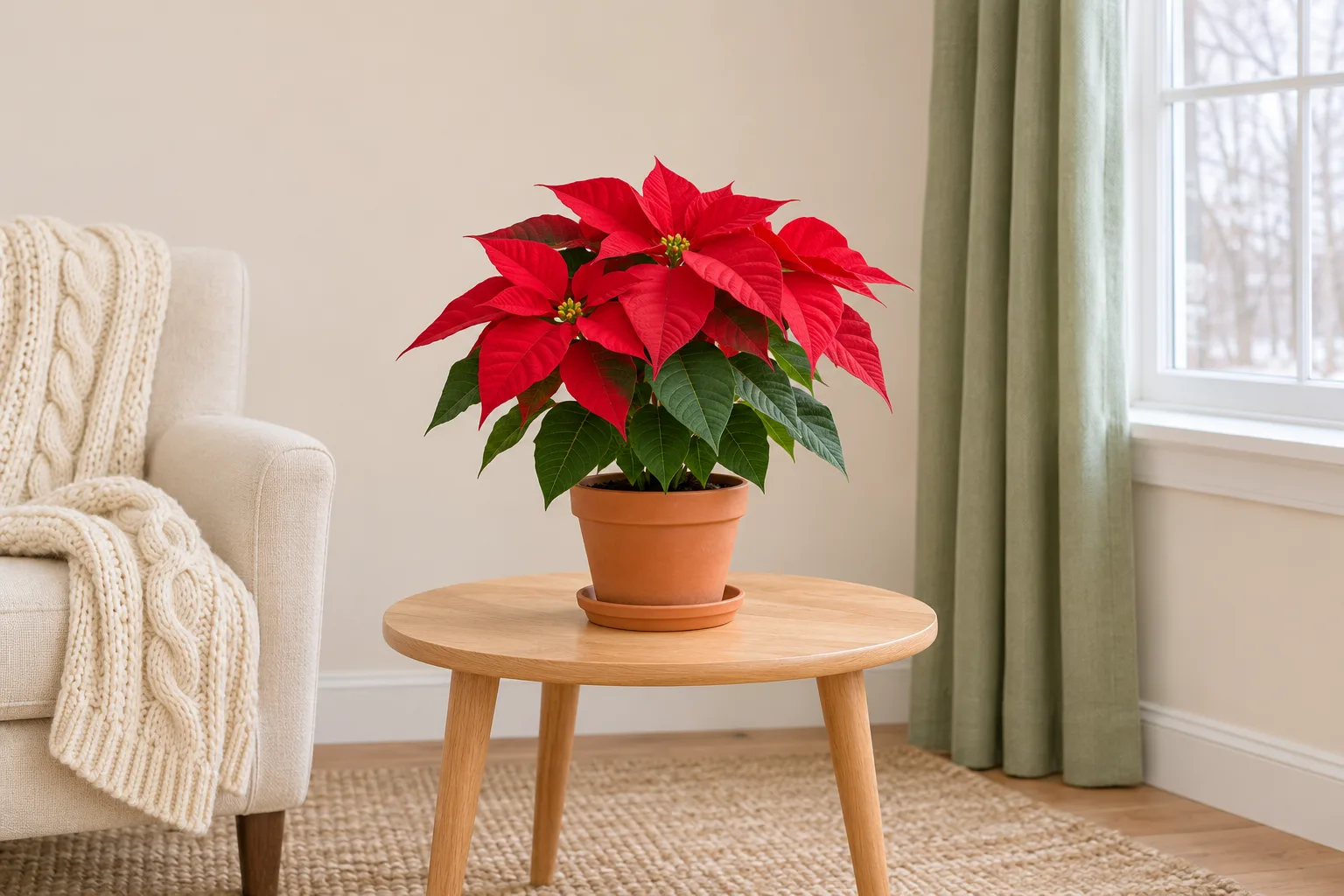
Keep your poinsettia plant happy through the holidays with four basics: bright indirect light, steady room temperatures around 65°F, water only when the soil feels dry, and no cold drafts. Most poinsettias that die early are overwatered or chilled on the trip home, so those two things matter most.
Poinsettia plant care at a glance
- Daily effort
- about 2 minutes to check the soil and the spot it sits in
- Difficulty
- easy for holiday care. Reblooming it next year is medium to hard (see below)
- Cost
- just the plant. A saucer and a houseplant fertilizer you may already own cover the rest, and prices vary
- Best light
- about 6 hours of bright, indirect light a day
- Best temperature
- 60 to 70°F, with about 65°F ideal
Pick a healthy plant and get it home warm
Start with a good plant. Extension guides suggest looking for:
- Bright, fully colored bracts (the "petals" are really colored leaves) and small yellow flowers in the center that are still closed or only partly open
- Dark green leaves all the way down to the soil
- No drooping, wilting, fading or torn leaves
- No whiteflies or aphids on the undersides of the leaves
- A plant that hasn't been stuck in a plastic sleeve for a long time
Cold hurts them fast. Illinois Extension warns that even a few minutes of low temperatures can damage the bracts and leaves, so have the plant wrapped before it leaves the store and don't leave it in a cold car.
Where to put your poinsettia plant
Light. Aim for about 6 hours a day of bright, indirect light. A spot near a sunny window works well as long as the leaves don't touch the cold glass. Mississippi State Extension says direct sun is tolerated, but it raises water needs and can shorten how long the bracts last.
Temperature. Illinois Extension gives 60 to 70°F in the daytime and about 55°F at night, with 65°F ideal. Purdue says anything under 50°F causes wilting and bract drop, and that temperatures above 70°F shorten the plant's life. Keep it away from:
- Heating vents and radiators
- Fireplaces
- Drafty doors and windows
- Cold window glass at night
How to water a poinsettia
Overwatering is the most common reason for leaf and bract drop, according to Mississippi State Extension. A simple routine:
- Check the soil every day or two. Water when the surface feels dry to the touch or looks lighter in color.
- Water thoroughly until water runs out of the bottom of the pot.
- Empty the saucer so the pot never sits in water. Standing water starves the roots of oxygen (Purdue).
- Small pots dry out faster than big ones, so check a 4-inch pot more often.
Deal with the foil sleeve
Many store poinsettias come wrapped in decorative foil. Illinois Extension recommends punching holes in the foil so water can drain into a saucer, and discarding any excess water so the roots don't rot.
Feeding and common problems
- Fertilizer: Illinois Extension suggests a diluted houseplant fertilizer about monthly, but not while the plant is in bloom. After the holidays, follow the package directions.
- Leaves dropping: usually too much or too little water, cold drafts, or temperatures that are too high. Wilting also makes the plant drop its bracts early (Illinois Extension), so check the soil and the location first.
- Bugs: whiteflies and aphids hide on the undersides of leaves. If you see them, contact your local Cooperative Extension office for treatment advice for your area.
Are poinsettias poisonous to pets?
The plant's reputation is worse than the facts. The ASPCA lists poinsettia as toxic to dogs and cats, but describes the effect as irritation of the mouth and stomach that sometimes causes vomiting, and says its toxicity is generally over-rated. Mississippi State Extension notes the milky sap may irritate the skin or eyes of sensitive people.
What to do with your poinsettia plant after the holidays
You have two easy options, both from University of Vermont Extension:
- Treat it like any houseplant. Keep it in bright light, water when the soil is dry and feed it according to the fertilizer package.
- Cut it back. When the leaves start to fall, trim it to about 6 to 8 inches high, keep it somewhere cool (around 60°F) with less water, and go back to normal watering and feeding when new growth appears.
Poinsettias are only hardy outdoors in USDA zones 9 to 11, so in most of the US they need to stay indoors through winter.
Can you make a poinsettia turn red again?
Yes, but it takes patience. Poinsettias are short-day plants, which means they only color up when the nights are long and completely dark. Purdue estimates about 2.5 months of daily attention. Here is the schedule, combining Purdue, Illinois Extension and Mississippi State Extension:
| When | What to do |
|---|---|
| May | Cut the stems back to about 4 to 6 inches and repot if you like |
| Late May onward | After the last frost danger, you can move it outdoors |
| Through mid-August | Pinch off the shoot tips about every 3 to 4 weeks to keep it bushy |
| About 1 October to mid-December | Give it bright light for 6 to 8 hours in the day, then complete darkness at night, for example 5 p.m. to 8 a.m., by moving it into a closet or covering it |
| Late November onward | Bracts start to color. Return it to a bright window and stop the dark treatment once color shows |
Even a little light at night, such as a hallway lamp, can stop the plant from flowering. Many people find this a hassle, so buying a fresh plant each year is also perfectly fine.
Frequently asked questions
How often should I water a poinsettia plant?
There is no fixed schedule. Check the soil every day or two and water thoroughly only when it feels dry, then empty the saucer. Small pots need checking more often than big ones.
Why is my poinsettia dropping its leaves?
The usual causes are overwatering, letting the soil dry out completely, cold drafts, or hot, dry air near a vent. Sudden chills, even from the trip home, can also cause bract and leaf drop.
Where is the best place for a poinsettia at home?
Somewhere bright with indirect light for about 6 hours a day, around 60 to 70°F, away from heating vents, radiators and cold glass.
Are poinsettias poisonous to cats and dogs?
The ASPCA lists them as toxic to cats and dogs, but the effects are generally mild: irritation of the mouth and stomach, and sometimes vomiting. Keep pets away from the plant and call your vet if you are worried.
Can I keep a poinsettia plant after Christmas?
Yes. Keep caring for it as a houseplant, or cut it back when the leaves start to fall and bring it back to normal care when new growth appears.
Sources
More garden ideas
- Garden
DIY Garden Chair Bird Bath: Upcycle an Old Chair
DIY garden chair bird bath turns an old chair into a shallow, bird-safe water station. Easy afternoon project, about $5–$25 plus paint drying time.
- Garden
How to Propagate String of Turtles (Easy Cuttings)
Learn how to propagate string of turtles from stem cuttings: what to cut, how to root them, how long it takes and how to fix rot. Easy and cheap.
- Garden
How to Propagate Poinsettia from Cuttings (and When)
Learn how to propagate poinsettia from stem cuttings: when to take them, how to root them in 3 to 4 weeks, and how to check for plant patents.