Winter Garden: Meaning and Budget Ways to Build One
Winter garden meaning explained: what it is, plus budget ways to build one with a cold frame, low tunnel or row cover for about $10–$200.
In this guide
- What does "winter garden" mean?
- What can you grow in a winter garden?
- Budget ways to build a winter garden
- What you'll need
- How to build a simple cold frame
- Step 1: Pick the spot
- Step 2: Size the box to your window
- Step 3: Build the sides
- Step 4: Set the lid
- Step 5: Plant and manage
- How to make a quick low tunnel
- Step 1: Set the hoops
- Step 2: Drape the cover
- Step 3: Anchor the edges
- Step 4: Vent on sunny days
- Floating row cover: the cheapest start
- Tips to keep costs down
- Frequently asked questions
- What is the meaning of a winter garden?
- Can you really grow vegetables in winter?
- How much does a budget winter garden cost?
- Is a cold frame better than a low tunnel?
- When should I plant a winter garden?
- Sources
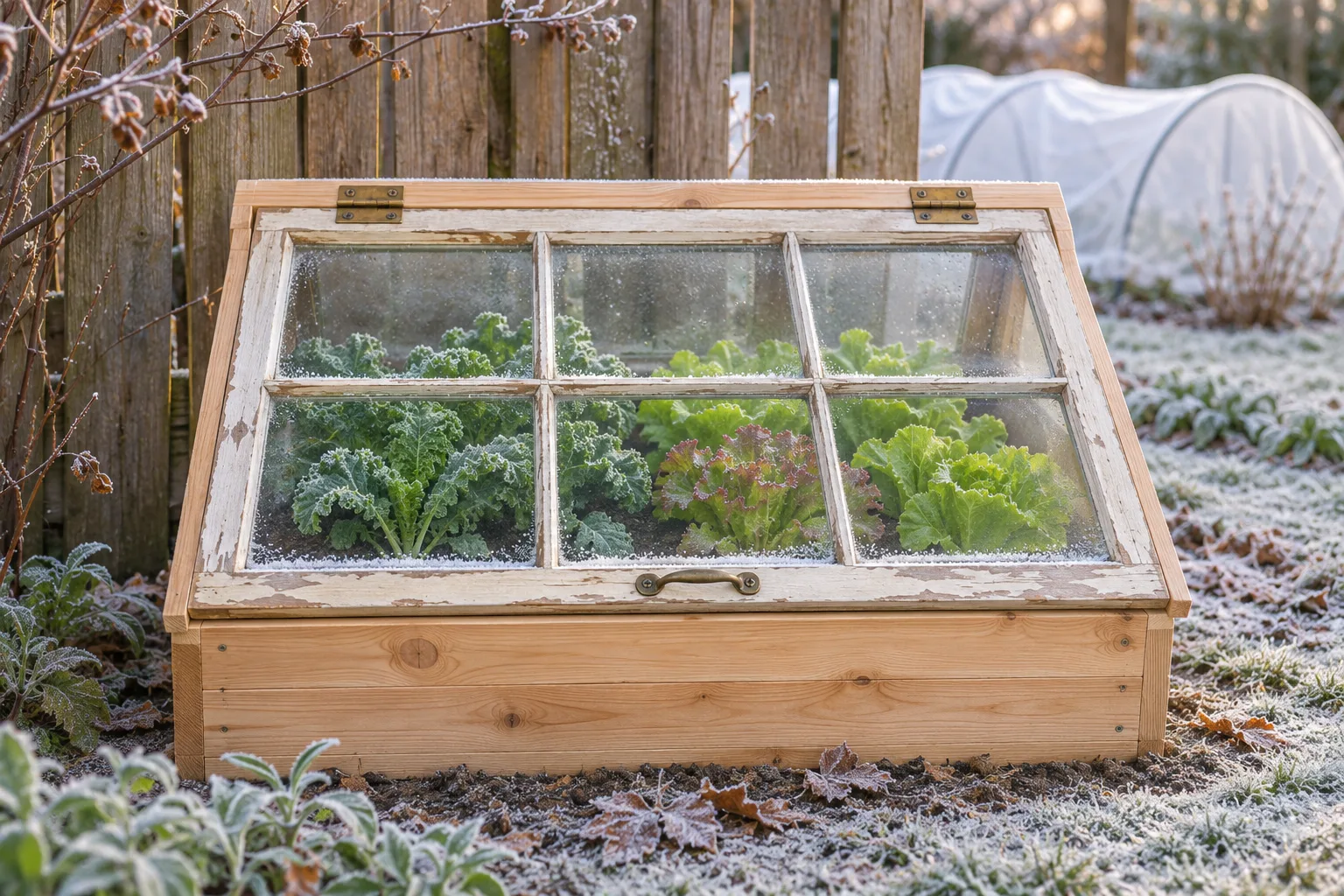
In gardening, the meaning of a winter garden is a garden planted or kept going through the cold months, either to harvest hardy food crops or simply to stay green and interesting until spring. The older meaning is a glass-walled conservatory for growing plants indoors. If you want one on a budget, the easiest route is a simple season extender: a cold frame, a low tunnel or a floating row cover, each costing roughly $10 to $200 depending on how you build it (prices vary).
At a glance (cold frame, low tunnel or row cover)
- Time
- about 1–2 hours to build a basic frame or tunnel; a row cover takes minutes. Crops still grow slowly in winter, so harvest takes weeks, not days.
- Difficulty
- easy (cold frame: easy to medium if you build the box yourself)
- Approx. cost
- about $10–$30 for a row cover, $20–$100 for a low tunnel, $70–$200 for a built or kit cold frame. Salvaged windows and lumber can bring a cold frame well below that.
What does "winter garden" mean?
The phrase has a few meanings, which is why search results can look mixed:
- A garden kept going in winter. Wikipedia describes the modern winter garden as one planted to produce food, or at least to stay visibly planted and slowly develop through winter, or whose plants serve as living decoration all winter. Plants may go dormant under snow and resume growth when temperatures rise above freezing.
- A conservatory. In the 19th century, a winter garden meant a glazed building, often facing south with large areas of glass, for growing warm-climate plants and relaxing all year. The first major public example opened in London's Regent's Park between 1842 and 1846. Building one is a real construction job, not a weekend DIY.
- A place name. Winter Garden is also a city in Florida, which is unrelated to this guide.
The rest of this guide covers the first meaning: a practical, low-cost garden you can keep going in the cold.
What can you grow in a winter garden?
Cold-hardy crops do the work. Penn State Extension lists vegetables that tolerate heavy frost (below 28°F), including spinach, onions, garlic, leeks, kale, cabbage, collards, Brussels sprouts, arugula, radishes, mustard greens and turnips. Iowa State Extension notes that cold frames suit cool-season crops such as lettuce, spinach and radishes.
Be realistic about growth. Oregon State Extension notes that winter vegetables don't grow much from November through February, and in its region most plantings go in during July and August. In practice:
- If it's already late fall or winter: protect what's already growing, and use a cold frame to keep hardy greens going.
- If you're planning ahead: sow hardy crops in late summer or early fall so they're established before growth slows.
Check your local extension office for your region's dates; they vary a lot across the US.
Budget ways to build a winter garden
| Option | Protection | Approx. cost | Best for |
|---|---|---|---|
| Floating row cover | Air a few degrees warmer; freeze protection down to roughly 24–28°F | $10–$30 | Quick protection for greens and kale |
| Low tunnel (hoops + cover) | About 2–4°F warmer, up to about 10°F with fabric over plastic | $20–$100 | Longer beds and rows |
| Cold frame | Solar-heated box; extends the season by 2–4 weeks in fall and spring | $70–$200 built or kit; less with salvaged materials | Lettuce, spinach, herbs, hardening off seedlings |
Cost and protection figures come from Utah State University Extension; treat them as ballparks.
What you'll need
For a cold frame from salvaged materials:
- An old window sash, storm window or other clear cover (rigid or fiberglass clear panels also work)
- Untreated lumber, cinder blocks, or straw bales for the sides
- Hinges (optional) and a stick or prop to hold the lid open
- A thermometer
- Basic tools: saw, drill and screws, tape measure
For a low tunnel:
- Hoops made from PVC pipe, rebar or electrical conduit
- Lightweight row-cover fabric or greenhouse plastic
- Clips, bricks, sandbags or soil to hold the edges down
How to build a simple cold frame
Step 1: Pick the spot
Face the frame south and, if you can, put the north end against a house, garage or fence to cut heat loss, as Iowa State Extension advises. Pick a spot that gets sun through winter and isn't shaded by buildings.
Step 2: Size the box to your window
Build the frame to match your window. Keep the depth to 3 feet or less so you can reach the plants. Iowa State suggests about 12 inches high at the front and 18 inches at the back, so the lid slopes toward the sun and sheds water.
Step 3: Build the sides
Cut the lumber to size, screw the sides together, and set the box on the ground. Untreated wood, cinder blocks, concrete, plastic lumber and straw bales all work.
Step 4: Set the lid
Rest the window on top. Hinge it at the back if you want, and keep a prop handy so you can lift it for ventilation.
Step 5: Plant and manage
Sow or transplant cool-season crops inside. Open the lid when it warms up: Iowa State advises raising the sash when the air inside rises above 85°F and closing it before sunset. Utah State warns that overheating is the main risk with every season extender, so keep a thermometer inside and check it on sunny days.
How to make a quick low tunnel
Step 1: Set the hoops
Push hoops into the soil every few feet along a bed about 3 feet wide. Penn State Extension notes that even small hoops, a few inches above the crop, work to keep the fabric off the foliage; Utah State describes larger low tunnels as roughly 4 feet tall and 3–6 feet wide.
Step 2: Drape the cover
Lay row-cover fabric or greenhouse plastic over the hoops. The hoops keep the cover off the foliage, which helps stop it freezing to the plants.
Step 3: Anchor the edges
Weigh down the sides with bricks, sandbags or soil. Utah State notes that for overwintering you can bury the sides of the cover in soil.
Step 4: Vent on sunny days
Plastic traps a lot of heat, so lift or open the ends on mild, sunny days. Fabric lets air and water through, which reduces how much venting you need.
Floating row cover: the cheapest start
Row cover is lightweight fabric that rests directly on the plants and doesn't need supports. Secure the edges with landscape staples, bricks, boards or soil so the wind can't take it. Utah State lists air temperature gains of 2–10°F and freeze protection down to about 24–28°F. Heavier fabrics give more protection but let in less light.
Tips to keep costs down
- Ask for old windows at salvage yards, or from neighbors who are replacing theirs.
- Use scrap lumber, cinder blocks or straw bales for cold frame sides.
- Start with a row cover and add hoops later.
- Reuse the same cover year after year; store it dry.
Frequently asked questions
What is the meaning of a winter garden?
It's a garden maintained during winter, either with hardy plants for food or decoration, or, in the older sense, a glazed conservatory for growing plants indoors all year.
Can you really grow vegetables in winter?
Yes, cold-hardy ones such as kale, spinach, leeks and radishes. Growth is slow from November to February, so plant ahead and use covers for protection.
How much does a budget winter garden cost?
Utah State Extension puts row covers at about $10–$30, low tunnels at about $20–$100 and cold frames at about $70–$200 to build or buy. Salvaged materials can reduce this. Prices vary by region and store.
Is a cold frame better than a low tunnel?
They suit different jobs. A cold frame is a solid, solar-heated box that suits greens, herbs and seedlings in a small footprint; a low tunnel covers longer beds and is lighter and easier to move.
When should I plant a winter garden?
For most hardy vegetables, late summer to early fall, so they're established before slow winter growth. Dates depend on your region, so check with your local extension office.
Sources
- Winter garden, Wikipedia
- Winter gardens: a brief history and warm variations, Designing Buildings
- All About Cold Frames, Iowa State University Extension
- Extending the Garden Season, Utah State University Extension
- Winter vegetable production on small farms and gardens west of the Cascades, Oregon State University Extension
- Cool Weather Gardening, Penn State Extension
More garden ideas
- Garden
DIY Garden Chair Bird Bath: Upcycle an Old Chair
DIY garden chair bird bath turns an old chair into a shallow, bird-safe water station. Easy afternoon project, about $5–$25 plus paint drying time.
- Garden
How to Propagate String of Turtles (Easy Cuttings)
Learn how to propagate string of turtles from stem cuttings: what to cut, how to root them, how long it takes and how to fix rot. Easy and cheap.
- Garden
How to Propagate Poinsettia from Cuttings (and When)
Learn how to propagate poinsettia from stem cuttings: when to take them, how to root them in 3 to 4 weeks, and how to check for plant patents.