DIY Home Decor and Upcycling Ideas on a Budget
Budget-friendly DIY home decor and upcycling ideas: 10 easy projects using jars, frames, crates and thrifted finds, with time, cost and safety tips.
In this guide
- At a glance
- Before you start: prep and safety
- DIY home decor and upcycling ideas
- 1. Jar lanterns with battery tea lights
- 2. Thrifted frame gallery wall
- 3. Tin can planters and desk organizers
- 4. Wooden crate wall shelves
- 5. Painted thrift-store vases
- 6. Fabric-wrapped lampshade refresh
- 7. No-sew pillow covers from thrifted sweaters
- 8. Dresser hardware and paint makeover
- 9. Cake-stand style risers from plates and candlesticks
- 10. Embroidery hoop fabric art
- Make your upcycled décor look put together
- Frequently asked questions
- What are the cheapest DIY home decor and upcycling ideas for beginners?
- What paint works best when upcycling décor?
- Is it safe to sand or paint old furniture?
- Where can I find items to upcycle?
- Sources
These DIY home decor and upcycling ideas turn things you already own, or can pick up at a thrift store, into pieces that make a room look finished. Each of the 10 projects below uses basic tools, takes an afternoon or less, and costs little or nothing if you shop your own cabinets first.
At a glance
- Time
- 15 minutes to 2 hours of hands-on work per idea, plus paint or glue drying time (check the product label)
- Difficulty
- easy to medium
- Cost
- roughly $0 to $25 per project, depending on what you already have. Prices vary by store and region.
Before you start: prep and safety
Upcycled décor looks best when the prep is done properly. Three habits make every project below turn out better:
- Clean first. Wash jars, cans, frames and vases with warm soapy water and let them dry fully. Paint and glue won't stick to grease or dust.
- Sand lightly and use a primer or a paint made for the surface. Glossy, slick surfaces need a scuff-sand or a bonding primer. Follow the paint label for coats and cure times.
- Work with the windows open. Paints, strippers and solvents release fumes. The EPA advises increasing ventilation when you use these products and following the label's precautions, and notes that indoor levels can run far above outdoor levels during activities like paint stripping.
DIY home decor and upcycling ideas
1. Jar lanterns with battery tea lights
Time: 15 minutes · Difficulty: easy · Cost: about $0 to $8
Clean glass jars (pasta sauce, jam or mason jars) make soft evening lighting. Wrap the neck with twine or a strip of fabric, drop in a battery-powered tea light and group three or four jars of different heights on a tray or windowsill. Frosted glass looks great too: dab the outside with a sponge and a little acrylic paint thinned with water, or use a spray made for glass.
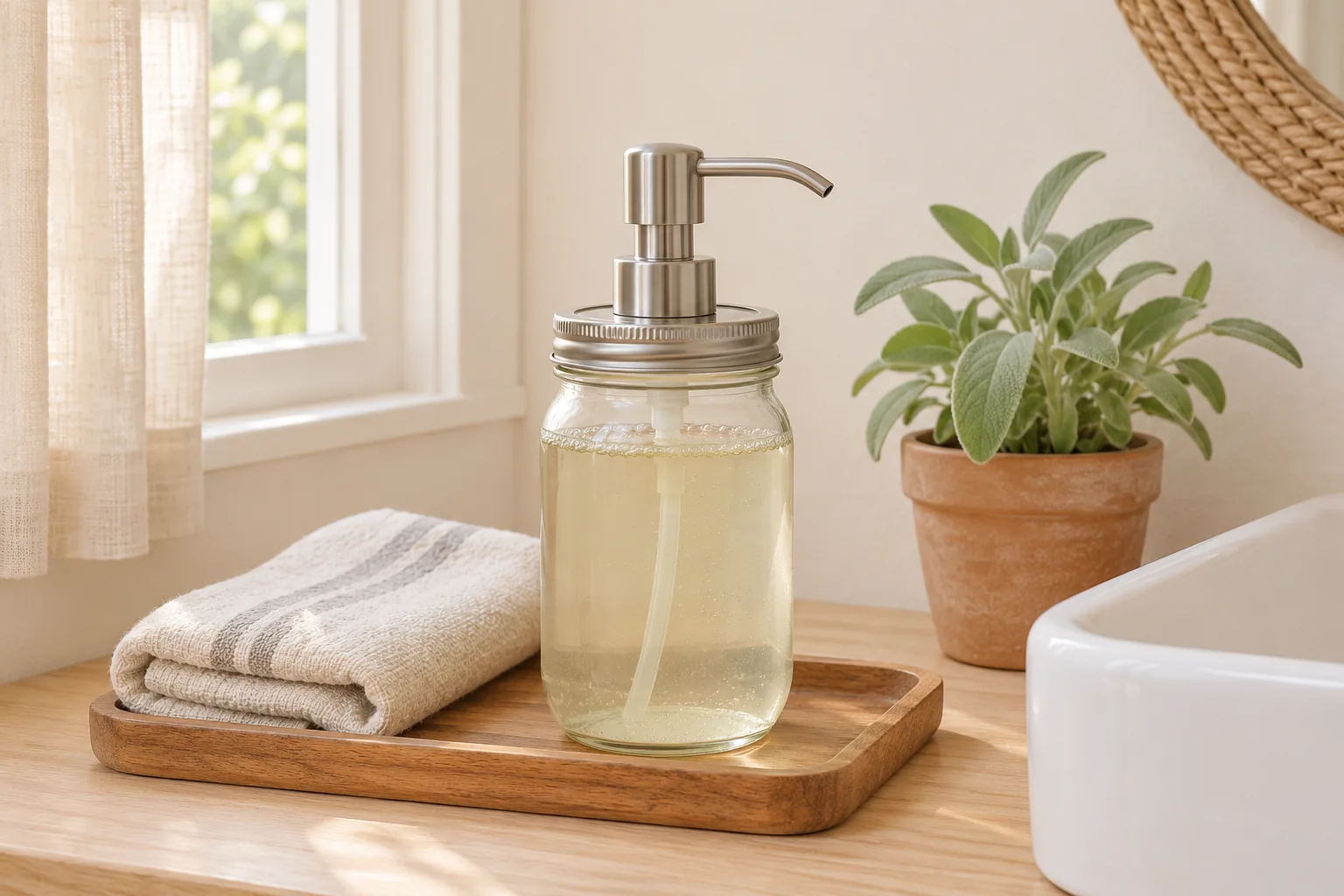
If you like jar projects, the mason jar soap dispenser is a quick bathroom version.
2. Thrifted frame gallery wall
Time: 1 to 2 hours · Difficulty: easy · Cost: about $5 to $25
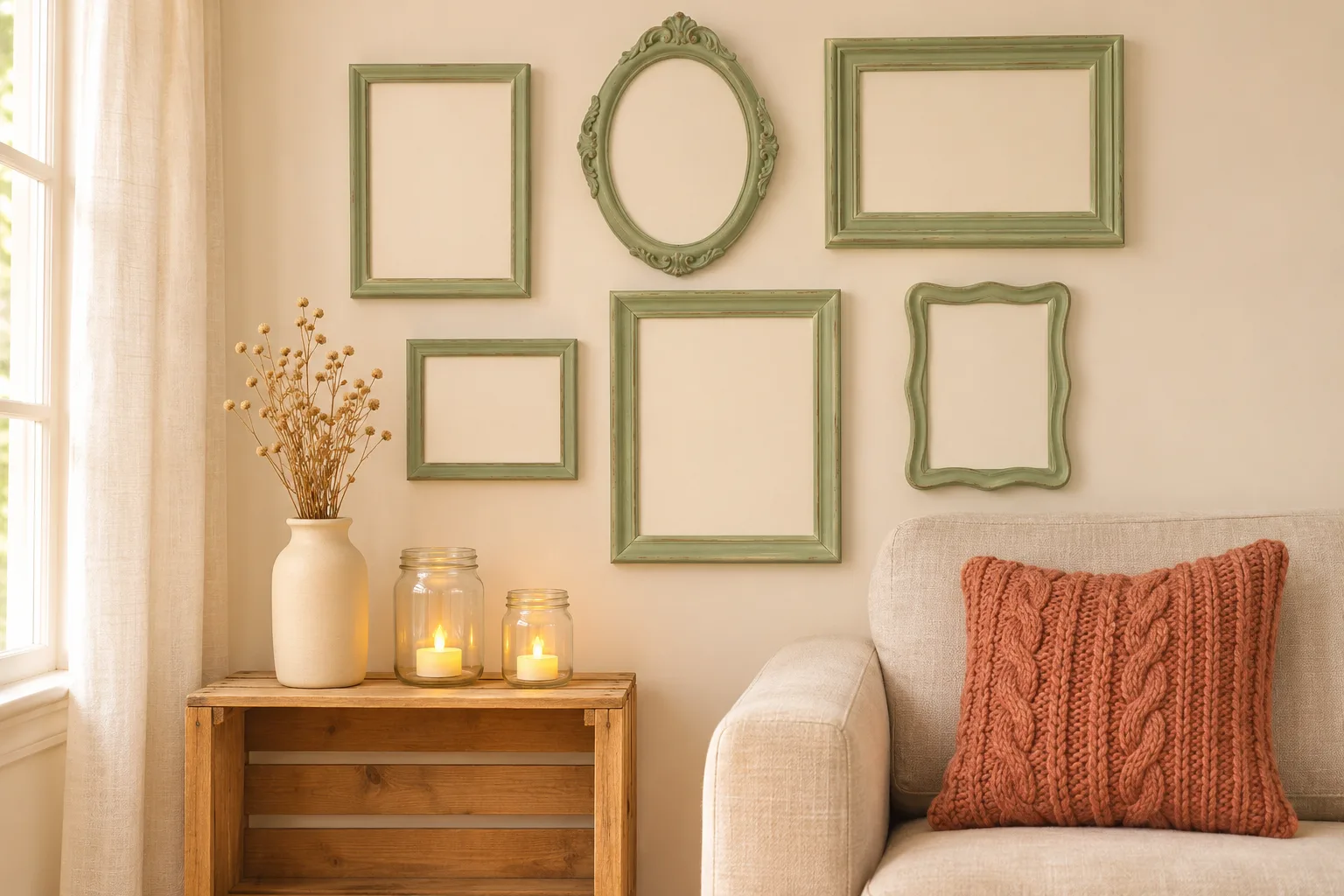
Mismatched thrift-store frames look intentional once they share one color. Remove the backing and any art, clean the frames, and give them one coat of primer and two of the same paint. Matte black, warm white or a soft green all work well. Fill them with free printable art, pages from old books or maps, pressed leaves or fabric scraps.
Lay the frames on the floor first and arrange them with 2 to 3 inches between each. Trace each frame on paper, tape the paper shapes to the wall, and adjust until it looks right before you hammer anything.
3. Tin can planters and desk organizers
Time: 30 minutes · Difficulty: easy · Cost: about $0 to $10
Empty food cans make good planters for herbs and succulents, or pencil cups for a desk. Peel the label, wash the can and check the rim for sharp edges. Paint the outside with a metal-friendly spray paint, or glue on jute twine or scrap fabric. For a planter, punch two or three drainage holes in the bottom with a hammer and a nail, and set the can on a saucer.
4. Wooden crate wall shelves
Time: 1 to 2 hours · Difficulty: medium · Cost: about $10 to $25
Wooden fruit or wine crates from a thrift store or craft shop turn into rustic shelves. Sand the rough spots, wipe off the dust and finish with a wood stain or a coat of paint. Mount a crate with the opening facing out, using screws long enough to reach a wall stud, or use wall anchors rated for more than the weight you plan to put on it.
Stack two or three crates in a staggered pattern for a bookcase look, and fasten them to each other with screws as well as to the wall.
5. Painted thrift-store vases
Time: 45 minutes plus drying · Difficulty: easy · Cost: about $3 to $12
Dated glass or ceramic vases become modern accent pieces with a coat of paint. For a "ceramic" look, spray a glass vase with a matte paint made for glass and ceramics, in cream, terracotta or sage. For a dipped effect, mask half the vase with painter's tape and paint the rest. Let each coat dry before you handle it.
Painted vases are best kept for dried stems or faux flowers. Paint on the inside of a vase can peel when it sits in water.
6. Fabric-wrapped lampshade refresh
Time: 1 hour · Difficulty: medium · Cost: about $5 to $15
A tired lampshade can be re-covered rather than replaced. Trace the shade on the back of a fabric remnant, an old tablecloth or a cloth napkin, cut it slightly oversize, and glue it on with spray adhesive or fabric glue. Fold the extra over the top and bottom rims and trim the excess.
7. No-sew pillow covers from thrifted sweaters
Time: 30 to 45 minutes · Difficulty: easy · Cost: about $3 to $10
Chunky knit sweaters make cozy winter pillow covers. Lay a pillow insert on the sweater, mark the size, cut the sweater so it has a bit of excess, then turn it inside out and close the open edges with fabric glue or iron-on hem tape. Check the product label for washing and heat instructions, and let it dry before turning it right-side out.
If you sew, use a straight stitch instead. It will hold up to more washing.
8. Dresser hardware and paint makeover
Time: 2 hours plus drying · Difficulty: medium · Cost: about $15 to $30
New knobs can change a worn dresser or side table. Remove the old hardware, fill the holes if you are changing the hole spacing, clean the surface, prime, then apply two thin coats of paint. Add a sealer if the piece will see heavy use, such as a tabletop or an entry table.
Take one old knob with you when you shop, so the screws and spacing match.
9. Cake-stand style risers from plates and candlesticks
Time: 20 minutes plus curing · Difficulty: easy · Cost: about $5 to $12
Glue a thrifted plate to a thrifted candlestick, or stack two different sized plates on a candlestick, and you get a pedestal tray for soap, jewelry or small decorations. Use a strong adhesive labeled for glass and ceramic, center the pieces carefully, and let it cure for the full time on the label before anyone uses it.
Treat the stand as decorative unless the adhesive label says it is food-safe. Keep it for non-food items such as soap or jewelry.
10. Embroidery hoop fabric art
Time: 20 minutes · Difficulty: easy · Cost: about $2 to $8
A wooden embroidery hoop frames fabric the way a picture frame frames a print. Stretch a patterned remnant, an old scarf or a pretty cloth napkin inside the hoop, tighten the screw, trim the excess fabric around the back, and glue it down. Hang it on a small nail or group several hoops of different sizes.
Make your upcycled décor look put together
- Pick a palette. Three colors across a room, such as warm white, a muted green and natural wood, make mismatched finds look like a set.
- Repeat a material. Use the same type of twine, or the same hardware finish, on several projects.
- Vary the heights. Group items in odd numbers, with tall, medium and short pieces.
- Edit as you go. If a project looks crowded, remove one item before you add another.
Frequently asked questions
What are the cheapest DIY home decor and upcycling ideas for beginners?
Jar lanterns, tin can organizers, embroidery hoop fabric art and painted frames are the cheapest and need the fewest tools. Most can be made with things already in your recycling bin or craft drawer.
What paint works best when upcycling décor?
It depends on the surface. Look for a product labeled for the material you are painting (wood, metal, glass or ceramic), use a primer if the label calls for one, and follow the recoat and cure times on the can.
Is it safe to sand or paint old furniture?
It can be, with care. Older pieces may have lead paint, so avoid dry sanding, wet the surface first if you must sand, work with ventilation and clean up the dust well. For anything large or badly chipped, ask a lead-safe certified contractor.
Where can I find items to upcycle?
Thrift stores, garage sales and your own recycling bin are the usual sources. Look for solid shapes and sturdy materials, and skip items that are cracked or badly damaged.
Sources
More diy projects ideas
- DIY Projects
DIY Wine Glass Floral Centerpiece: Easy and Cheap
A DIY wine glass floral centerpiece takes about 20 minutes and a few thrifted glasses. Learn fresh and faux versions, step by step.
- DIY Projects
Paint Roller Tape Dispenser Hack: Tape Trim Faster
The paint roller tape dispenser hack turns a roller frame into a tape applicator. Learn the steps, what it's good for and where it falls short.
- DIY Projects
Mason Jar Soap Dispenser DIY (No Drill Needed)
Make a mason jar soap dispenser in about 15 minutes with a pump-lid kit, or use a hammer-and-nail lid (add sealant cure time). Leak-proofing tips included.